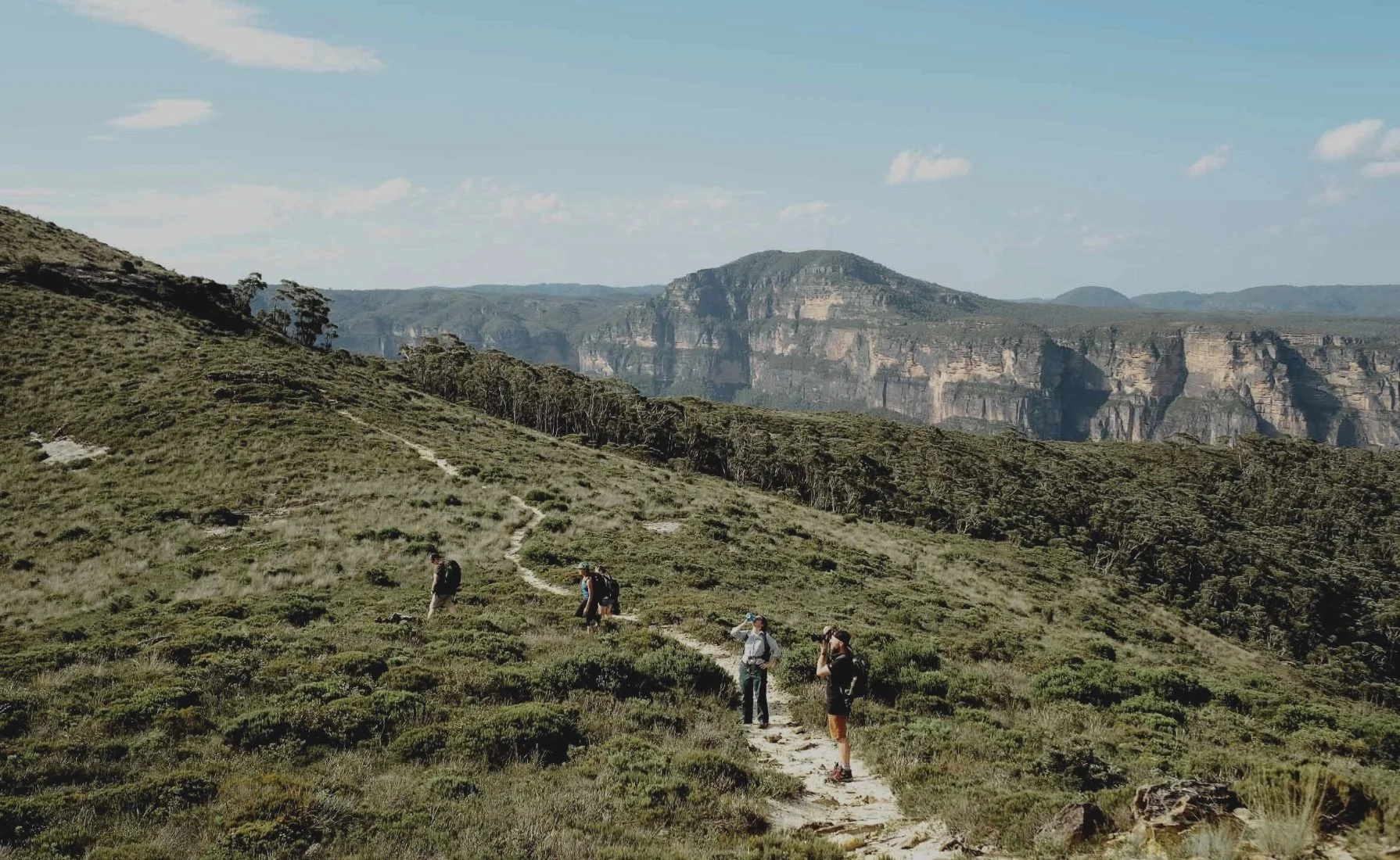
The Blue Mountains are one of those places that most people visit once and spend years thinking about. It's not just the views though the views are extraordinary. It's the sense of scale, the quality of the silence at a clifftop lookout in the early morning, the way the eucalyptus oil evaporating from the canopy turns the valleys a shade of blue that photographs can never quite capture. This is an ancient place. The sandstone you're standing on is 250 million years old. You can feel it.
We've spent years exploring the Blue Mountains, and the question we hear most often from people who've just visited isn't "what did you think?" it's "when can we come back?" Here's everything worth knowing before your first visit, and before your second. If you'd rather let someone else handle the planning, our Blue Mountains Private Tour covers the best of what's below in a single day from Sydney.
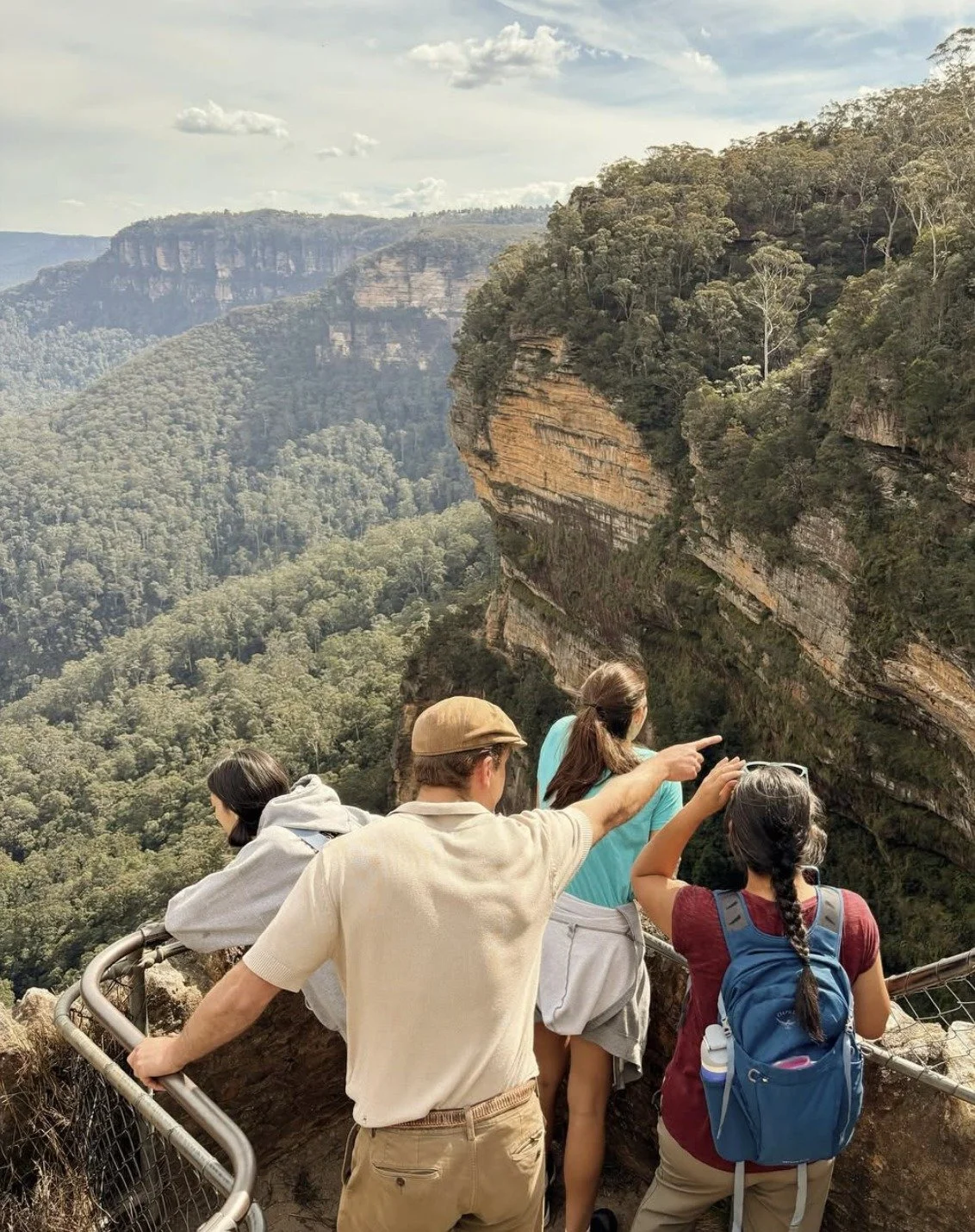
Start here not because it's the most dramatic thing in the mountains, but because it gives you the context for everything else. The Three Sisters are three sandstone columns rising from the escarpment edge above the Jamison Valley, and the view from Echo Point behind them 51 kilometres of ancient wilderness stretching toward the horizon is one of the defining Australian landscapes.
There's an Aboriginal Dreamtime story connected to the Three Sisters worth knowing before you visit. The short version is that three sisters were turned to stone by a medicine man to protect them during a battle, and he was killed before he could reverse the spell. The columns have stood there ever since.
From the main platform, walk five minutes east to the Federation lookout fewer people, and in some ways a better angle. Then, if your legs are willing, take the Giant Stairway down: 800 steps carved into the cliff face, descending into the Jurassic rainforest on the valley floor. It takes about 45 minutes down and considerably longer back up, but what you find at the bottom is worth it.
Scenic World is a genuine attraction rather than a tourist trap, which is a rare combination. The centrepiece is the Scenic Railway: at 52 degrees of incline, it's the steepest passenger railway in the world, and the descent into the Jamison Valley gives you a visceral sense of the escarpment's depth that no lookout quite captures. Your ticket covers all four rides: Railway, Cableway, Skyway, and Walkway, and the boardwalk at the base takes you through ancient temperate rainforest that predates the dinosaurs.
In peak season and on weekends, allow 2 to 3 hours rather than the usual 60 to 90 minutes as queues build across all four rides. It's absolutely worth it with little ones who tend to love the Railway descent, but if you're after a quieter, more contemplative day there are plenty of other remarkable spots in the mountains that see a fraction of the crowds.
The finest walking track in the Blue Mountains, and one of the best in Australia. The Prince Henry Cliff Walk follows the escarpment edge for seven kilometres between Katoomba and Leura, with continuous panoramic views across the Jamison Valley the whole way. The track passes through heath and eucalypt forest, dips into hidden gullies, and emerges at a series of lookouts, some famous, some known only to locals.
Most people walk sections of it rather than the full length. Even 30 minutes from Echo Point heading east takes you away from the crowds and into scenery that feels genuinely untouched. The full walk to Leura takes around two to three hours at a comfortable pace and finishes in the village, ideal timing for lunch.
"The Blue Mountains are one of those places that most people visit once and spend years thinking about. It's the scale. The silence. The particular shade of blue the valleys turn in the afternoon light."
Wentworth Falls is the waterfall most day trippers don't reach, which is almost entirely explained by the 20-minute walk required to get there. Most people see the upper lookout from the car park, take a photograph of the top of the falls, and leave. That's a significant mistake. The track to the base of the falls descends into a sheer canyon with one of the most dramatic lookouts in the mountains. The water dropping in two tiers into the gorge below, the sandstone walls rising on either side, and the scale of the whole thing becoming clear only once you're standing in it.
The Valley of the Waters track, which continues beyond Wentworth Falls, is one of the best longer walks in the mountains for those with time.

Drive 30 minutes north from Katoomba through the plateau town of Blackheath and you arrive at Govetts Leap, one of the most dramatic lookouts in the mountains and the one most Sydney day trippers never reach. The escarpment here drops sheer into the Grose Valley, one of the deepest gorges in the Blue Mountains World Heritage Area, and Govetts Leap Brook plunges over the edge in a waterfall that drops more than 180 metres.
The view from Govetts Leap is a different experience from Echo Point: wider, more remote-feeling, and with an afternoon light that falls differently across the valley. The Blackheath Cliff Walk, accessible from the same car park, follows the escarpment south toward Pulpit Rock through some of the finest scenery in the region. Allow time to walk at least part of it.
Leura is what a Blue Mountains day trip should taste and feel like a heritage village of federation-era cottages and garden estates, a main street that has changed remarkably little in 80 years, and the best selection of cafés and lunch spots in the mountains. It's where the day slows down appropriately, somewhere between the Cliff Walk and the afternoon's last lookout.
The Leura Mall (the main street, despite its name) has independent bookshops, antique dealers, and cafés that have been operating for decades without any particular interest in being discovered. Leura Gardens in spring particularly during the Leura Gardens Festival in October is one of the most beautiful displays of cool-climate horticulture in NSW. The gardens are private but open to visitors during the festival period.
The Megalong Valley is the Blue Mountains that most visitors never find. Accessible via a winding road that descends from the plateau just west of Katoomba, the Megalong is a wide agricultural valley surrounded on all sides by sandstone escarpment completely invisible from the main lookouts above and barely signposted from the highway. Horse studs and small farms occupy the valley floor. The road ends at the base of the cliffs.
Cahill's Lookout, accessible on the way down, sits on the plateau edge above the valley with a view that's entirely different from Echo Point looking down into an enclosed pastoral landscape ringed by ancient cliff walls, with the distinctive Boars Head rock formation rising from the valley floor. It's meditative in a way the more famous lookouts rarely are, and on a weekday morning you may well have it to yourself.
90 minutes west of Sydney by car via the Great Western Highway. By train, around 2 hours from Central Station to Katoomba on the Blue Mountains Line. A car gives you significantly more flexibility. If you want to combine Sydney and the Blue Mountains, our guide on how to spend 48 hours between Sydney and the Blue Mountains covers how to do both properly.
The plateau sits at around 1,000 metres elevation noticeably cooler than Sydney at any time of year, and genuinely cold in winter. Layers are essential regardless of season. Comfortable walking shoes with grip are worthwhile even if you don't plan to hike; the lookout access tracks are often uneven sandstone.
The mountains reward visitors in every season. Winter mornings bring low valley mist and empty car parks. Autumn turns the deciduous trees in Leura and Blackheath gold and red. Spring brings wildflowers along the escarpment. Summer mornings are excellent arrive early and leave before the afternoon storms.
The main street of Katoomba is worth a quick walk but the shops are largely unremarkable. BridgeClimb-style paid lookout experiences aren't available here the best views are all free. The Scenic Skyway is fine but the Railway and Cableway are the more worthwhile rides if time is limited.